

Design Journal
Your guide to Design-Build
Choosing a Kitchen Floor
by Marc Brahaney, April 15th 2026
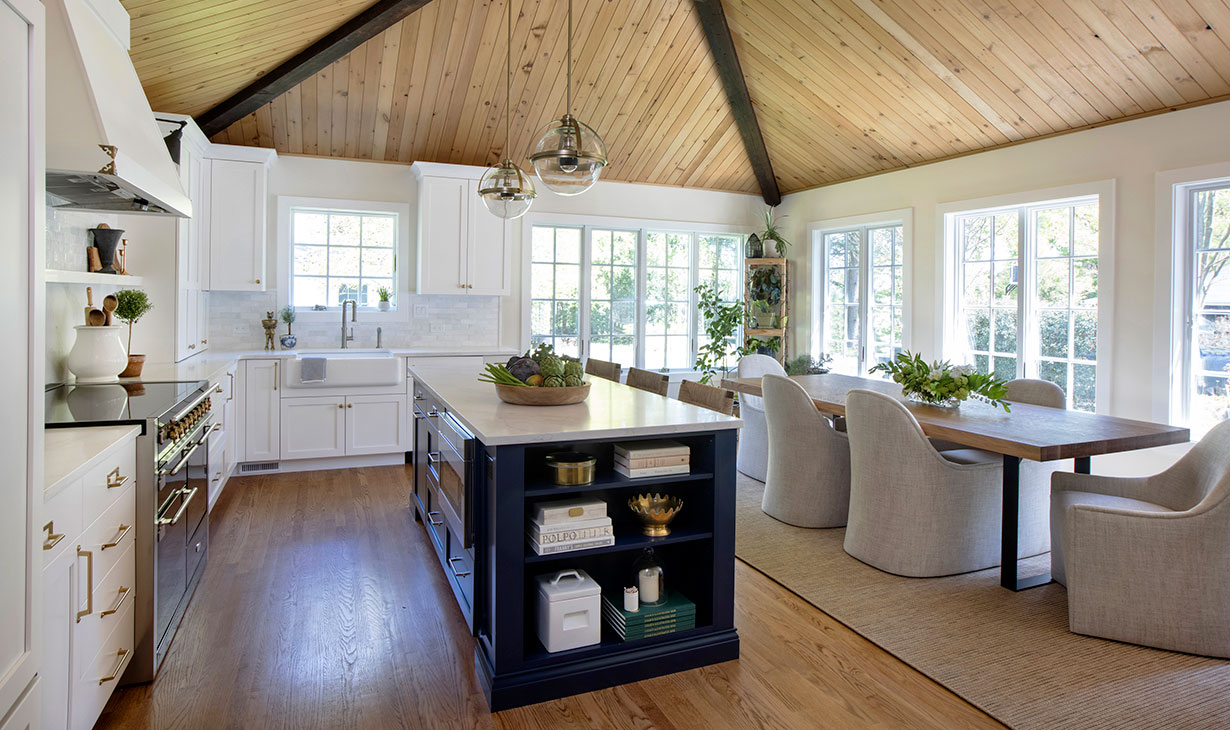
When homeowners with a busy family life renovate a kitchen, we often field questions about the flooring. What materials stand up to everyday wear and tear, while also providing the look a homeowner seeks in a space that hosts many friends and extended family?
When choosing a kitchen floor, your top consideration should be quality. If you use your kitchen a great deal, don’t cut corners with flooring even if it means paying more than you anticipated. If you scrimp, you will regret it. Kitchen flooring that’s made well and installed properly will pay for itself over and over again.
When we ask our clients to share the features they look for in a kitchen floor, we hear some or all of the following requirements (but not necessarily in this order). The floor must be resilient (R), easy to maintain/clean (M), comfortable (C), beautiful (B), and green (i.e., eco-friendly – not the color) (G).
Most floors have some of these traits, but finding flooring with all of them can be challenging. For this reason, you should consider the features most important to you and choose your flooring accordingly.
Let’s consider some popular kitchen flooring options and see how they stack up against our criteria. I’ll set aside “beautiful (B)” because that tends to be subjective:
Hardwood (R/M/C/G) — Hardwood seems to go with any style, is relatively warm underfoot, easy on the back and legs, and a relatively quiet option. The maintenance and durability of a hardwood floor vary depending on the hardness of the wood species and its finish. Even though hardwood may scratch, it can always be sanded and refinished.
Engineered hardwood is also an option. It’s a warm, classic choice with more stability than solid wood; it is better at resisting moisture and temperature changes. However, like solid wood, it’s not fully waterproof and can scratch. The thickness of the top (wear) layer of an engineered floor is also important to consider; it should be no less than 4mm.
Tile (stone, ceramic, quarry, or terra-cotta) (R/M/G) — The colors and patterns available in tile allow for an abundance of design options. It is extremely durable and will look good forever. Tile is generally easy to clean but grout can discolor over time (hint: the larger the tiles, the fewer the grout lines). On the flip side, tile can be cold underfoot and unforgiving on a cook’s back, legs and dropped china. The hardness of a tile floor can also make for a noisy room.
Linoleum (R/M/C/G) — Linoleum (brand name Marmoleum) is making a huge comeback in these days of heightened sensitivity to the environment. You may hear “linoleum” and have images of your elementary school cafeteria, but if you do some research, you’ll be amazed how far this product has come and how green it is. Made from linseed oil, rosins, wood flour, jute and ecologically responsible pigments, you’ll enjoy all the qualities we’ve discussed above while feeling good about making an eco-friendly choice.
Luxury Vinyl Tile/Luxury Vinyl Plank (M/C) — Available in sheets or tiles, vinyl is popular because it comes in many styles, colors and patterns. It’s easy to clean and maintain, comfortable on the back and legs and is an affordable option (don’t forget about the importance of quality. If you do go with vinyl, choose the highest grade possible). A downside to vinyl is that it’s not a natural material; when it appears as something else (i.e., stone), it may look fake.
Polished Concrete (R/M/B) – Concrete is very durable and low-maintenance with a modern, industrial look. It can be tinted or textured to customize it for specific kitchen styles. Not surprisingly, it’s pretty hard and cold underfoot and likely to require comfort mats or a rug. It can crack but shouldn’t if it’s properly installed.
Some materials not as commonly used but still worth considering are laminate, bamboo, cork or even rubber.
BOTTOM LINE - Looking for the ideal kitchen floor can be challenging. Identifying the characteristics that are most important to you will make your choice easier – especially if you keep in mind that choosing the highest quality materials and installations will give you the most satisfaction and best performance over the long-term.
As with all the selections you will make for your home renovation, your architectural team is happy to help with any questions you have.
Ready to explore your options?
At Lasley Brahaney Architecture + Construction, we bring over 35 years of experience to every project, from thoughtful renovations to custom-built homes. Call us at (609) 921-2822 or send us a message to schedule a conversation about your vision.
 Cabinetry Design & Style
May 15th 2026 Tile Care
March 15th 2026 Countertops
February 15th 2026 Renovation Timeline
January 15th 2026 The Lasley Brahaney Story
December 15th 2025 Finding the Fit
November 15th 2025 A More Energy-Efficient Home
October 15th 2025 Purchasing Land
September 15th 2025 Renovate, Buy or Build
August 15th 2025 How to Budget for a Home Renovation
July 15th 2025 When to Hire an Architect
June 15th 2025 How to Choose an Architect
May 15th 2025 Why Choose Design-Build?
April 15th 2025 Surviving Construction
March 15th 2025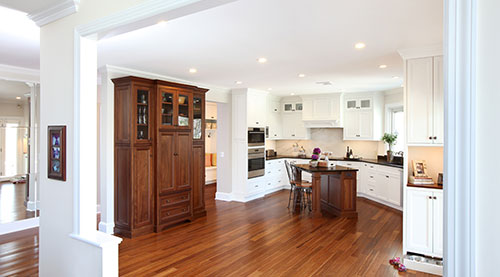 Aging in Place
February 15th 2025 Choosing Paint and Finishes
January 15th 2025


